On the page
- Is the Driver Who Hit Me Always at Fault?
- When the Front Driver Can Share Fault
- Why Rear-End Injuries Are More Serious Than They Look
- What Can I Claim After Being Rear-Ended in Nevada?
- What Not to Do After Being Rear-Ended
- What to Do Immediately After the Crash
- The 2-Year Deadline You Cannot Ignore
- Frequently Asked Questions
- Call (702) 867-8900 for a Free Consultation
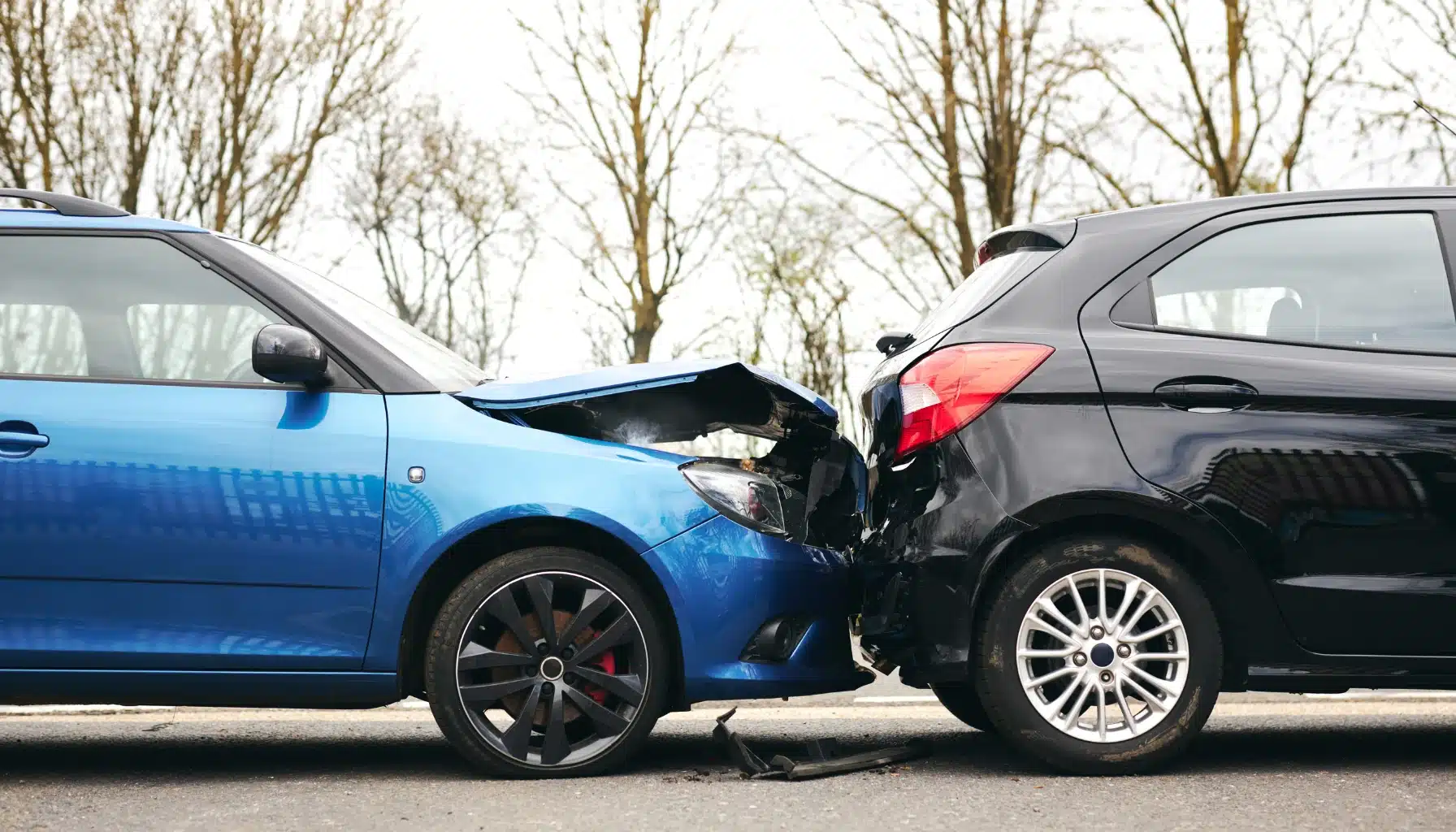
One moment you’re stopped at a red light on Eastern Avenue or sitting in traffic on the I-15. The next, someone hits you from behind. Your car lurches forward. Your neck snaps. And suddenly you’re dealing with a situation you never planned for.
Rear-end collisions happen every day in Las Vegas. Most people involved in one don’t fully understand their legal rights until it’s too late to protect them. This article covers who is legally responsible under Nevada law, what your injuries could actually be worth, and the mistakes that quietly kill otherwise strong claims.
Is the Driver Who Hit Me Always at Fault?
Usually, yes. But not automatically.
Nevada law under NRS 484B.127 requires every driver to maintain a reasonable and prudent following distance from the vehicle ahead. The idea is simple: you need enough space to stop safely even if traffic slows without warning. A driver who follows too closely and causes a rear-end crash has violated that statute. That violation is a misdemeanor, and in a civil injury claim, it creates something called negligence per se. In plain English, that means the injured person does not have to argue why tailgating was unreasonable. Proving the law was broken and that it caused the crash is enough.
Nevada courts and insurance companies start from a presumption that the rear driver caused the crash. For the most common scenarios, where you were stopped at a light, slowing in traffic, or driving normally when hit, that presumption is solid.
What it is not, though, is absolute.
When the Front Driver Can Share Fault
 The rear-driver presumption can be challenged with evidence. There are real situations where the front driver shares responsibility or is primarily at fault.
A front driver may bear some or all of the blame if they cut off the rear driver without enough space or a proper turn signal, made an abrupt lane change without warning, had brake lights that were broken or not functioning, reversed their vehicle unsafely in a traffic lane in violation of NRS 484B.113, or intentionally slammed on their brakes without cause to provoke an impact.
Mechanical failures can shift fault too. If a defective braking system played a role, a vehicle manufacturer may share liability.
Under Nevada’s modified comparative negligence law, NRS 41.141, if both drivers share some fault, each person’s compensation is reduced by their percentage of responsibility. You can still recover damages as long as you are 50% or less at fault. Cross above that threshold and you recover nothing. Insurance companies know this rule well and will look for any angle to push your share of fault higher. How that argument gets countered depends on the evidence collected and how quickly legal representation gets involved.
Why Rear-End Injuries Are More Serious Than They Look
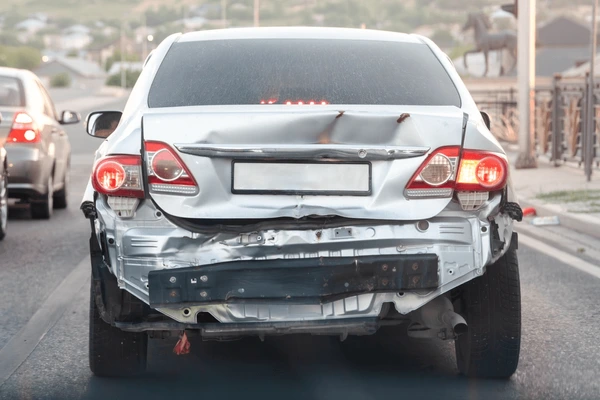
The car damage after a rear-end crash is often modest. A crumpled bumper. A bent trunk. Sometimes almost nothing visible at all. Insurance adjusters love this because they use it to argue the impact could not have caused real injury. That argument is medically wrong.
The human body, particularly the neck and spine, absorbs force differently than sheet metal. In a rear-end impact, your torso is pushed forward while your head momentarily stays behind, then snaps forward and back. This motion damages the soft tissues of the neck and upper back in ways that have nothing to do with how dramatic the vehicle damage looks.
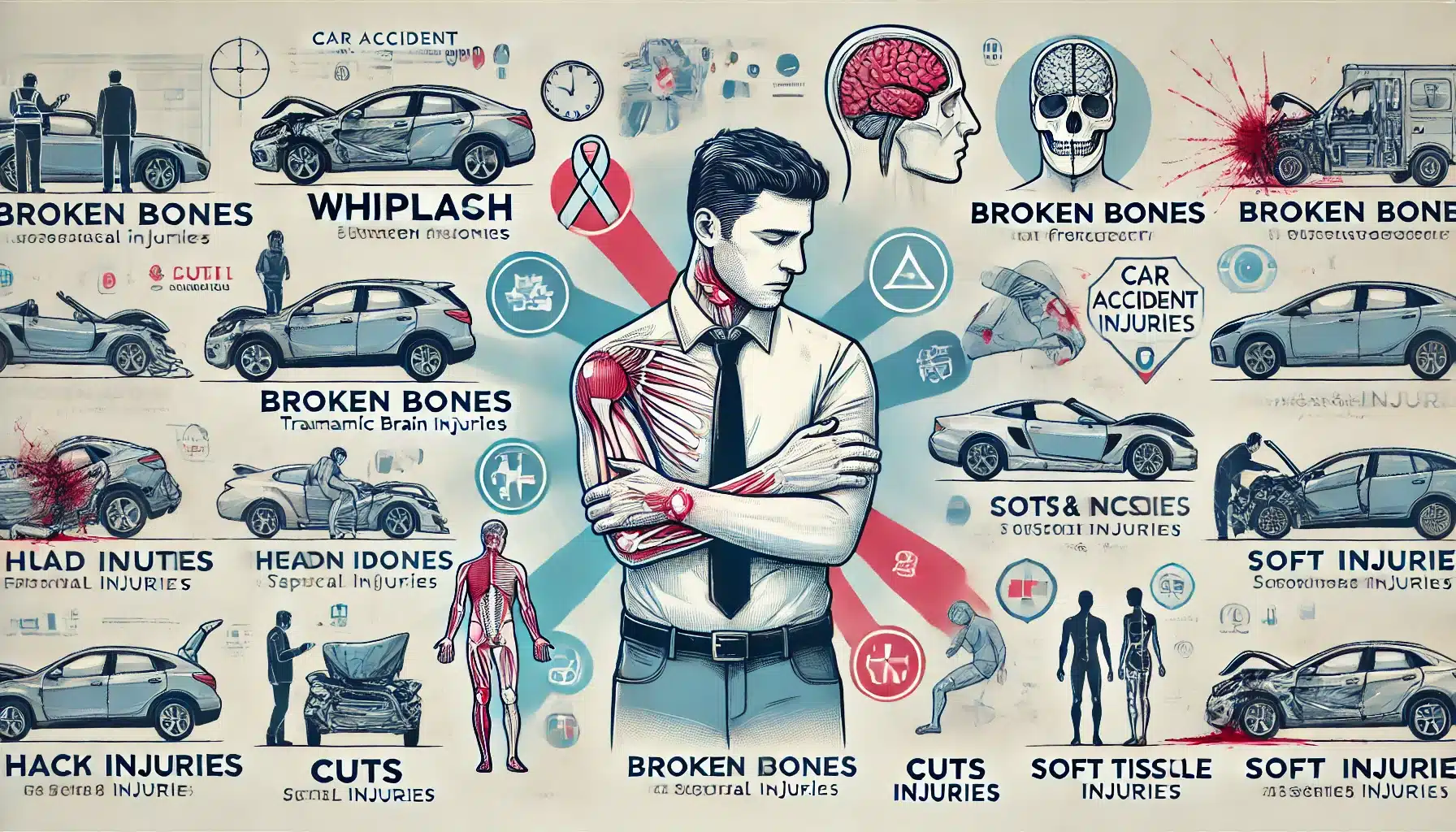
Whiplash is the most common result. It involves strain or tearing of the muscles, tendons, and ligaments in the cervical spine. Symptoms include neck stiffness and pain, persistent headaches, shoulder and upper back pain, dizziness, difficulty concentrating, and fatigue. These symptoms frequently do not appear immediately. Adrenaline masks pain in the hours after a crash. Many people feel fine at the scene and wake up the next morning barely able to turn their head. This delayed onset is a documented medical reality, not exaggeration. The problem is that if you did not seek medical attention right away, that gap becomes the insurance company’s primary weapon against your claim.
Herniated discs are more serious and more common in rear-end crashes than people realize. The force of the impact can compress the spine and cause the cushioning discs between vertebrae to bulge or rupture, pressing against nerves. This produces radiating pain, numbness, and weakness that can extend down the arms or legs and may require injections, physical therapy, or surgery to treat.
Concussions can occur when the rapid movement of a rear-end impact causes the brain to shift inside the skull. Symptoms like confusion, sensitivity to light, memory problems, and mood changes can emerge gradually over the days following the crash, which is why anyone who was in a significant rear-end collision should be evaluated even if they feel okay at the scene.
What Can I Claim After Being Rear-Ended in Nevada?
Because Nevada is an at-fault state, the driver who caused your crash is financially responsible for your losses. Their bodily injury liability coverage pays up to their policy limits. What falls within a valid claim includes the following.
Medical expenses cover everything connected to treating your injuries: emergency care, imaging, hospital stays, surgery, prescriptions, physical therapy, and future treatment your injuries are expected to require. Lost wages cover income you could not earn while recovering. If the injuries affect your ability to work long term, future earning capacity is also on the table. Pain and suffering compensates for the physical pain and emotional toll the injuries have caused, and the value depends heavily on how severe the injuries are, how long recovery takes, and how the injuries have affected your daily life. Property damage covers your vehicle repairs or replacement and any personal property damaged in the crash.
How much any specific case is worth cannot be reduced to a single average number because the variables are too different from case to case. What determines value is the severity and duration of your injuries, the totality of your documented losses, clarity of fault, and what insurance coverage exists. A case involving whiplash that resolved in six weeks is valued very differently from one involving a herniated disc requiring surgery. The goal is recovering the full value of what you actually lost, not settling for what the insurance company decides to offer on its own.
What Not to Do After Being Rear-Ended

There are a handful of mistakes that consistently damage otherwise strong cases. Each one is avoidable.
Do not skip medical treatment. Going directly from the accident scene to a law office is not the right order of operations. Medical evaluation comes first. Same-day treatment creates the documented link between the crash and your injuries. Waiting even a few days gives the insurance company room to argue your injuries happened somewhere else.
Do not give a recorded statement to the other driver’s insurance company. You are not required to do this. Insurance adjusters are trained to ask questions in ways that extract answers useful for minimizing claims. Something as innocent as “I feel okay, just a little sore” can become part of their argument that your injuries were minor. Speak with a car accident attorney before you speak with anyone from the opposing insurer.
Do not accept the first settlement offer. Early offers almost always arrive before your treatment is finished and before the full cost of your injuries is known. Accepting requires signing a release that permanently waives your right to more compensation, even if your condition worsens or new injuries emerge. Once you sign, that is the end.
Do not stop treatment early. If you stop attending medical appointments before your doctor clears you, insurance companies will argue that your injuries were not serious enough to require the care you claimed. Consistency of treatment matters to the value of your claim.
What to Do Immediately After the Crash
Call 911 and get a police report on record, even if the crash feels minor. Photograph both vehicles from multiple angles, your injuries, skid marks, traffic signals, road conditions, and anything else visible at the scene. Get the other driver’s full name, license plate number, insurance details, and phone number. Ask any witnesses for their contact information.
At the hospital or urgent care, be thorough about describing every symptom, including symptoms that seem small. Tell the doctor about the accident. Every complaint you make becomes part of your medical record and supports the connection between the crash and your injuries.
After treatment, start keeping a record. Note every day you miss work, every activity you cannot do, every way the injuries are affecting your daily life. This kind of documentation is evidence, and it is often the difference between a claim that gets taken seriously and one that gets lowballed.
The 2-Year Deadline You Cannot Ignore
Nevada law under NRS 11.190(4)(e) gives you two years from the date of the crash to file a personal injury claim. Missing that deadline means losing the right to compensation entirely, regardless of how clear the fault is or how severe your injuries turned out to be.
Two years sounds like a long window. Between medical treatment, insurance negotiations, and the demands of daily life while recovering, it closes faster than people expect. Starting the process early also allows your attorney to preserve evidence, contact witnesses, and document your damages fully while everything is still fresh and available.
Frequently Asked Questions
My car barely has any damage. Do I still have a valid injury claim?
Yes. The amount of visible vehicle damage does not determine the severity of bodily injury. Rear-end impacts can cause significant soft tissue and spinal injuries at relatively low speeds. Insurance companies use the low-damage argument frequently, but it is not a legal barrier to your claim.
The other driver only has minimum insurance and my bills are already over $25,000. What are my options?
Nevada’s minimum bodily injury coverage is $25,000 per person. If your damages exceed that, the at-fault driver is personally responsible for the remainder. Whether collecting from them personally is realistic depends on their situation. If you carry underinsured motorist coverage on your own policy, that coverage can step in to pay the gap between what their policy covered and your actual damages.
What if I already gave a recorded statement?
It is not the end of your case. A recorded statement can complicate things, but experienced attorneys deal with this regularly. The full picture of your injuries, treatment, and losses still matters. Get legal representation as quickly as possible after any misstep.
Do I need a lawyer for a rear-end accident?
For minor fender benders with no injury, you may not. But if you have any injury, if the other driver’s insurance is downplaying your claim, or if your medical costs are significant, having a car accident attorney consistently produces better outcomes. The contingency fee structure means you pay nothing unless your attorney wins.
Call (702) 867-8900 for a Free Consultation
Get The Win Injury Lawyers represents rear-end accident victims throughout Las Vegas, Henderson, North Las Vegas, Summerlin, and all of Southern Nevada. Your consultation is free, you pay nothing unless we win, and if you cannot make it to our office at 319 S 3rd St Suite 200, Las Vegas, NV 89101, we will come to you.
Available 24/7 at (702) 867-8900.

We are more than just a personal injury firm. Our team of experienced trial lawyers focuses on complex catastrophic injury and wrongful death cases. These matters require a higher level of skill and dedication than ordinary personal injury claims, and not every law firm is equipped to handle them.
Related Posts
Sep 23 2024 What are the car accident laws in Nevada?
Aug 12 2025 Las Vegas Rear End Accident Attorney

Sep 23 2024 What to do after a car accident in Las Vegas?
Sep 23 2024 Nevada bus accident lawsuit process explained
Client Testimonials
We prioritize client satisfaction from the first consultation to the final case resolution. And our Las Vegas personal injury attorneys have earned 5-star client satisfaction, with glowing testimonials from injured clients across Nevada. We prioritize client satisfaction from the first consultation to the final.
Results & track record
Nevada
born and bred
Trusted
and reviewed
99.9%
satisfaction
Proven
trial lawyers
Awards & Associations