
On the page
- What Does "Third Party" Actually Mean?
- What Is Bodily Injury Liability Coverage?
- What Does Third-Party Bodily Injury Coverage Pay For?
- What Bodily Injury Coverage Does NOT Pay For
- What Nevada Requires Drivers to Carry
- When the At-Fault Driver's Coverage Is Not Enough
- The 2-Year Deadline You Cannot Miss
- Why Insurance Companies Don't Always Pay What They Should
- What to Do After an Accident in Las Vegas
- Questions We Hear a Lot
- Talk to a Car Accident Lawyer in Las Vegas for Free
Insurance language is confusing on purpose. Companies use terms like “third-party bodily injury liability” and assume you already know what they mean. Most people don’t, and that’s a problem when you’re sitting in an emergency room after a crash trying to figure out who’s paying for any of this.
This article breaks it down in plain English. No jargon, no fine print. Just a clear explanation of what third-party bodily injury coverage is, what it pays for, what it doesn’t, and what it means for you if you were hurt in a crash in Las Vegas.
What Does “Third Party” Actually Mean?
Start here, because this is where most people get lost.
In insurance, every policy has two main parties. The first party is you, the person who bought the policy. The insurance company is the second party. Anyone else, meaning anyone outside that agreement, is the third party.
So when someone says “third-party bodily injury claim,” they mean a claim filed by a person who was hurt by someone else’s driving, against that driver’s insurance policy. You are the third party. The at-fault driver is the first party. Their insurance company is the second.
If another driver ran a red light and hit you, and you file a claim against their insurance, that is a third-party bodily injury claim. It has nothing to do with your own policy. You are making a claim against someone else’s coverage because their driver caused your injuries.
What Is Bodily Injury Liability Coverage?
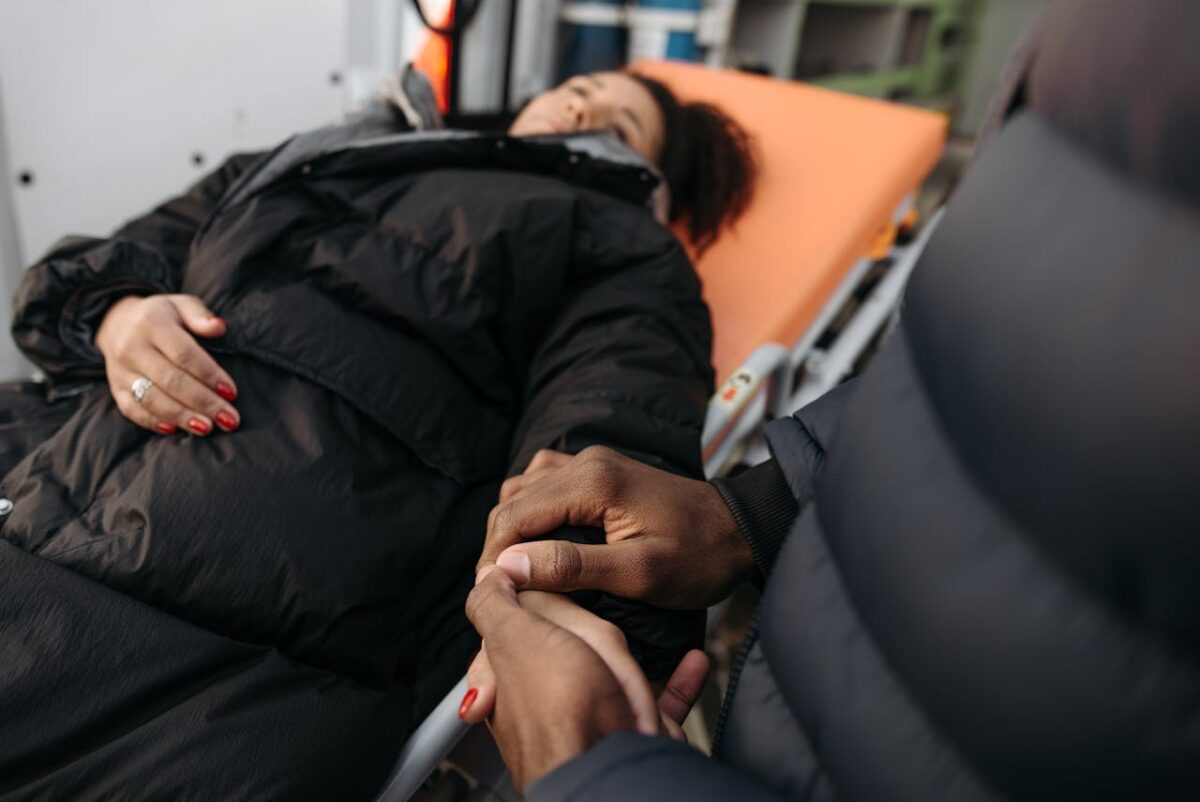 Bodily injury liability coverage is the part of a car insurance policy that pays for injuries the policyholder causes to other people in an accident. It does not cover the policyholder’s own injuries. It is specifically designed to pay the people they hurt.
Nevada is what’s known as an at-fault state. That means the driver who caused the accident is financially responsible for the injuries and losses of everyone else involved. Their bodily injury liability coverage is the mechanism through which that responsibility gets paid.
Every driver legally on the road in Nevada is required by law to carry this coverage under NRS 485.185. If they don’t have it and they cause an accident, you still have legal options, but recovering what you’re owed becomes significantly more complicated.
What Does Third-Party Bodily Injury Coverage Pay For?
When you file a third-party bodily injury claim against an at-fault driver’s policy, the coverage is designed to pay for a fairly wide range of losses, not just the ambulance bill.
Medical expenses are the most straightforward part. This includes emergency room care, surgery, hospital stays, prescription medications, diagnostic imaging like MRIs and X-rays, physical therapy, and any medical equipment you need during recovery. As long as the treatment is reasonably connected to the injuries from the accident, it falls within the coverage.
Lost wages are also covered. If your injuries kept you out of work, even temporarily, the bodily injury claim can include compensation for the income you lost during that time. For people who are self-employed or paid hourly, this can be a significant portion of the total claim.
Pain and suffering goes beyond the bills. Under Nevada law, you are entitled to compensation for the physical pain and emotional distress the injuries caused you. This covers the suffering itself, not just the cost of treating it. Putting a number on this is one of the more complex parts of any car accident claim, and it’s an area where legal representation consistently makes a meaningful difference.
Funeral and burial costs are covered in cases where a person died as a result of the accident. Families who lose someone in a crash can pursue these costs through a wrongful death claim against the at-fault driver’s bodily injury policy.
Legal defense costs are also worth knowing about, though from the at-fault driver’s perspective. If the injured person sues, the bodily injury policy typically covers the driver’s legal defense costs as well as any judgment, up to the policy limits.
What Bodily Injury Coverage Does NOT Pay For
This matters just as much as what it does cover.
Third-party bodily injury coverage does not pay for your own injuries if you are the at-fault driver. If you caused the crash, you cannot file a claim against your own bodily injury coverage for yourself. You would need separate medical payments coverage, known as MedPay, or your personal health insurance to cover your own treatment.
It does not cover damage to your vehicle. Property damage is handled by a separate part of the policy, called property damage liability. Bodily injury coverage only applies to physical injuries to people.
It does not cover you as the injured party if the at-fault driver’s insurance company disputes liability, delays the claim, or offers a settlement that does not reflect your actual losses. The coverage exists, but the insurance company’s job is to pay as little as possible. Having legal representation changes that dynamic significantly.
What Nevada Requires Drivers to Carry
Under Nevada law, every registered vehicle in the state must carry minimum liability insurance of $25,000 per person for bodily injury, $50,000 per accident for bodily injury when more than one person is hurt, and $20,000 for property damage. You will often see this written as 25/50/20.
The $25,000 per person limit is the most important number for most injured people. It is the maximum the at-fault driver’s insurance is required to pay for your injuries, regardless of how serious they are or how high your actual costs are.
Here’s the problem. A single emergency room visit after a serious crash can easily reach $20,000 to $30,000 before surgery, imaging, or follow-up care is factored in. If your injuries require hospitalization, surgery, or extended rehabilitation, the minimum limit gets exhausted fast. Anything above that limit is not the insurance company’s problem. It is the at-fault driver’s personal problem, and it becomes your problem to collect.
When the At-Fault Driver’s Coverage Is Not Enough
 This is one of the most frustrating situations an injured person in Las Vegas can face. The crash was not your fault. Your injuries are real and well-documented. And then you find out the other driver only carried the state minimum, and your medical bills are already past it.
You have a few paths forward.
If the at-fault driver has personal assets, you can pursue a personal injury lawsuit against them directly for the amount their insurance did not cover. Under Nevada law, a judgment can be collected through wage garnishment, liens, or other legal mechanisms. Whether that’s worth pursuing depends heavily on the driver’s actual financial situation.
If you have uninsured or underinsured motorist coverage on your own policy, known as UIM, that coverage can step in to cover the gap between what the at-fault driver’s policy paid and what your actual damages are. Nevada insurers are required to offer UIM coverage to every policyholder. Not everyone takes it. If you have it, it can be enormously valuable in exactly this situation.
You should also know that approximately 11% of Nevada drivers carry no insurance at all. If you were hit by an uninsured driver, your own UM coverage becomes your primary recovery option. This is one of the strongest arguments for carrying more than the state minimum on your own policy.
The 2-Year Deadline You Cannot Miss
Under Nevada law, you have two years from the date of the accident to file a personal injury claim. This applies whether you are pursuing the at-fault driver’s bodily injury coverage, filing a lawsuit, or both. Missing that deadline means losing your right to recover anything, regardless of how clear-cut the liability is or how severe your injuries are.
Two years sounds like a long time when you are in the middle of recovering. It moves faster than people expect, especially when ongoing medical treatment, insurance negotiations, and the stress of daily life are involved. Do not assume you have time to figure this out later.
Why Insurance Companies Don’t Always Pay What They Should
The at-fault driver’s bodily injury coverage exists to pay for your losses. That is its stated purpose. But the company administering that policy has a financial incentive to pay as little as they can justify.
In practice, this means adjusters will look for ways to argue your injuries were pre-existing, that you were partially at fault for the crash, that your treatment was excessive, or that your pain and suffering was not as significant as you claim. In Nevada, if an adjuster can shift more than 50% of fault onto you under the state’s comparative negligence law, your right to recover anything is eliminated entirely. Getting to exactly 51% is a strategy, not an accident.
An experienced Las Vegas car accident attorney knows these tactics. They know what your claim is actually worth. They know how to document injuries and losses in a way that builds the strongest possible case. And because they work on a contingency fee basis, you pay nothing unless they win.
What to Do After an Accident in Las Vegas
Get medical attention right away, even if you feel fine initially. Some injuries, including concussions and soft tissue damage, do not show full symptoms immediately. Prompt treatment also creates a medical record that ties your injuries to the crash, which matters enormously in any future claim.
Document everything you can at the scene. Photos of the vehicles, your injuries, road conditions, and any traffic signals or signs are all valuable. Get the other driver’s insurance information, license plate, and contact details. If anyone witnessed the crash, get their information too.
Do not give a recorded statement to the at-fault driver’s insurance company before speaking with an attorney. Adjusters are trained to ask questions that produce answers they can use to minimize your claim. You are not required to speak with the opposing insurance company, and doing so before understanding your rights puts you at a serious disadvantage.
Questions We Hear a Lot
If I was partially at fault, can I still file a third-party claim?
Yes, as long as you were not more than 50% responsible for the crash. Nevada’s comparative negligence law allows you to recover compensation even if you share some of the fault. Your recovery is reduced by your percentage of fault, but it is not eliminated unless you cross the 50% threshold.
What if the at-fault driver’s insurance denies my claim?
A denial is not the end. Insurance companies deny claims for many reasons, some legitimate and many not. A personal injury attorney can evaluate the denial, challenge it, and pursue the claim through litigation if necessary. A denial from an adjuster is not a final legal determination.
Does third-party bodily injury cover passengers in the at-fault driver’s vehicle?
Yes. Bodily injury liability coverage protects anyone injured by the at-fault driver’s actions, including passengers in their own vehicle, passengers in other vehicles, pedestrians, and cyclists.
Can I file a third-party claim and also use my own insurance?
In some situations, yes. Your own MedPay coverage, for example, can help cover immediate medical costs while the third-party claim is being processed. A personal injury attorney can help you understand which coverages apply to your specific situation and how to coordinate them so you are not leaving money on the table.
What if the other driver says it was my fault?
Each party’s account is just one piece of the picture. Police reports, photos, traffic camera footage, and witness statements all matter in establishing what actually happened. Insurance companies conduct their own investigations. So does your attorney, if you have one. The other driver’s claim of fault does not settle the question.
Talk to a Car Accident Lawyer in Las Vegas for Free
If you were injured in a crash and you are trying to figure out what the at-fault driver’s insurance owes you, a free consultation costs you nothing and gives you a much clearer picture of where you stand. Get The Win Injury Lawyers serves car accident victims throughout Las Vegas, Henderson, North Las Vegas, Summerlin, and all of Southern Nevada.
You pay nothing unless we win your case. If you cannot come to us, we come to you.
Call (702) 867-8900 — available 24/7
319 S 3rd St Suite 200, Las Vegas, NV 89101

We are more than just a personal injury firm. Our team of experienced trial lawyers focuses on complex catastrophic injury and wrongful death cases. These matters require a higher level of skill and dedication than ordinary personal injury claims, and not every law firm is equipped to handle them.
Related Posts
Sep 23 2024 What are the car accident laws in Nevada?



Sep 23 2024 What to do after a car accident in Las Vegas?
Client Testimonials
We prioritize client satisfaction from the first consultation to the final case resolution. And our Las Vegas personal injury attorneys have earned 5-star client satisfaction, with glowing testimonials from injured clients across Nevada. We prioritize client satisfaction from the first consultation to the final.
Results & track record
Nevada
born and bred
Trusted
and reviewed
99.9%
satisfaction
Proven
trial lawyers
Awards & Associations