On the page
- Statutory Text
- Plain English Explanation
- Frequently Asked Questions About NRS 41.085
- Who can sue when someone is killed due to another person's negligence in Nevada?
- What damages can a family member recover under NRS 41.085?
- Can a killer inherit money from the person they killed under this law?
- What expenses can the estate recover through a wrongful death lawsuit?
- Can a wrongful death lawsuit still be filed if the person responsible has also died?
Statutory Text
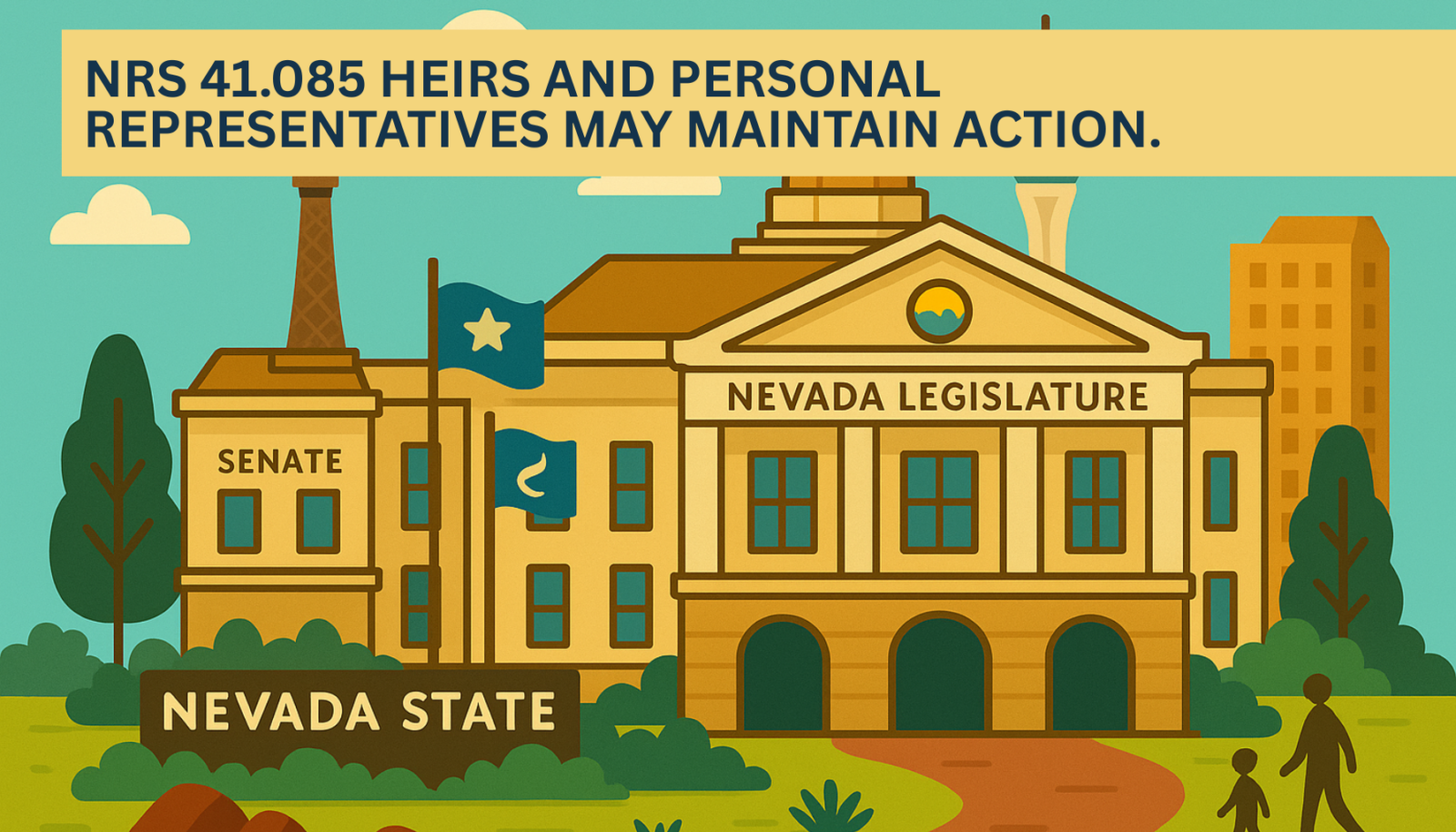
1. As used in this section, “heir” means a person who, under the laws of this State, would be entitled to succeed to the separate property of the decedent if the decedent had died intestate. The term does not include a person who is deemed to be a killer of the decedent pursuant to chapter 41B of NRS, and such a person shall be deemed to have predeceased the decedent as set forth in NRS 41B.330.
2. When the death of any person, whether or not a minor, is caused by the wrongful act or neglect of another, the heirs of the decedent and the personal representatives of the decedent may each maintain an action for damages against the person who caused the death, or if the wrongdoer is dead, against the wrongdoer’s personal representatives, whether the wrongdoer died before or after the death of the person injured by the wrongdoer. If any other person is responsible for the wrongful act or neglect, or if the wrongdoer is employed by another person who is responsible for the wrongdoer’s conduct, the action may be maintained against that other person, or if the other person is dead, against the other person’s personal representatives.
3. An action brought by the heirs of a decedent pursuant to subsection 2 and the cause of action of that decedent brought or maintained by the decedent’s personal representatives which arose out of the same wrongful act or neglect may be joined.
4. The heirs may prove their respective damages in the action brought pursuant to subsection 2 and the court or jury may award each person pecuniary damages for the person’s grief or sorrow, loss of probable support, companionship, society, comfort and consortium, and damages for pain, suffering or disfigurement of the decedent. The proceeds of any judgment for damages awarded under this subsection are not liable for any debt of the decedent.
5. The damages recoverable by the personal representatives of a decedent on behalf of the decedent’s estate include:
(a) Any special damages, such as medical expenses, which the decedent incurred or sustained before the decedent’s death, and funeral expenses; and
(b) Any penalties, including, but not limited to, exemplary or punitive damages, that the decedent would have recovered if the decedent had lived,
Ê but do not include damages for pain, suffering or disfigurement of the decedent. The proceeds of any judgment for damages awarded under this subsection are liable for the debts of the decedent unless exempted by law.
(Added to NRS by 1979, 458; A 1995, 2667; 1999, 1354)
NV Rev Stat § 41.085 – Last Verified February 2026
Plain English Explanation
When someone in Nevada dies because of another person’s wrongful actions or negligence, Nevada law gives certain people the right to file a lawsuit and seek compensation. This law covers two separate groups of people who can each bring their own claim.
The first group is the decedent’s heirs. An heir is someone who would have inherited the deceased person’s property under Nevada law if no will existed. One important exception is that a person who is legally considered to have killed the decedent cannot be an heir under this law. That person is treated as if they died before the victim did.
The second group is the personal representative of the deceased person’s estate. Think of a personal representative as someone officially appointed to handle the legal and financial affairs of a person who has passed away.
Both groups can file lawsuits separately, but the law also allows their claims to be combined into one court action when both arise from the same wrongful event. The lawsuit can be filed against whoever caused the death, and if that person has also died, it can be filed against their personal representative instead. If an employer or another party was responsible for the wrongdoer’s actions, they can be sued as well.
What heirs can recover: Heirs can be awarded money for their grief and sorrow, the loss of financial support they expected to receive, and the loss of companionship, comfort, and the close personal relationship they had with the deceased. They can also recover damages for any pain, suffering, or physical harm the deceased person experienced. Money awarded to heirs cannot be taken to pay off the deceased person’s debts.
What the estate can recover: The personal representative suing on behalf of the estate can recover things like medical bills the deceased person had before dying, funeral costs, and any punitive or penalty damages the person could have won had they survived. However, the estate cannot recover damages for the deceased person’s pain and suffering. Unlike money awarded to heirs, money recovered by the estate can be used to pay off the deceased person’s debts.
This law applies regardless of the age of the person who died, meaning it covers both adults and minors.
Frequently Asked Questions About NRS 41.085
Who can sue when someone is killed due to another person’s negligence in Nevada?
Two groups of people have the right to sue. The first group is the deceased person’s heirs, meaning the family members who would have inherited their property if no will existed. The second group is the personal representative of the deceased person’s estate, which is the person legally appointed to manage the estate’s affairs. Both groups can file separate lawsuits or combine their claims into one court action.
What damages can a family member recover under NRS 41.085?
Family members who qualify as heirs can recover money for their grief and emotional suffering, the loss of financial support they expected from the deceased, and the loss of companionship and closeness they shared with that person. They may also recover compensation for any pain, suffering, or physical injuries the deceased person endured before dying. Money awarded to heirs is also protected from being used to pay off the deceased person’s outstanding debts.
Can a killer inherit money from the person they killed under this law?
No. Nevada law specifically bars anyone who is legally determined to have killed the decedent from being considered an heir. That person is treated as if they died before the victim, which strips them of any right to benefit financially from the death they caused.
What expenses can the estate recover through a wrongful death lawsuit?
The estate can recover medical bills and other expenses the deceased person accumulated before dying, funeral and burial costs, and any punitive damages the deceased would have been entitled to had they survived. One key limitation is that the estate cannot recover damages specifically for the deceased person’s pain and suffering. Any money the estate recovers can be applied toward the deceased person’s unpaid debts.
Can a wrongful death lawsuit still be filed if the person responsible has also died?
Yes. Nevada law accounts for this situation directly. If the person who caused the death has since passed away, the lawsuit can be filed against that person’s personal representative instead. The law also allows lawsuits to be filed against employers or other parties who were responsible for the wrongdoer’s conduct at the time of the incident.
If you lost a loved one due to someone else’s negligence, Nevada law may give you the right to seek compensation for your loss. Speaking with a qualified Nevada wrongful death attorney can help you understand your rights and determine the best path forward for you and your family.

We are more than just a personal injury firm. Our team of experienced trial lawyers focuses on complex catastrophic injury and wrongful death cases. These matters require a higher level of skill and dedication than ordinary personal injury claims, and not every law firm is equipped to handle them.
Related Posts




Client Testimonials
We prioritize client satisfaction from the first consultation to the final case resolution. And our Las Vegas personal injury attorneys have earned 5-star client satisfaction, with glowing testimonials from injured clients across Nevada. We prioritize client satisfaction from the first consultation to the final.
Results & track record
Nevada
born and bred
Trusted
and reviewed
99.9%
satisfaction
Proven
trial lawyers
Awards & Associations